Nose Thread Lift Gone Wrong: Signs, Causes and What to Do

A nose thread lift can go wrong when a thread sits too close to the skin and shows as a ridge, when the tip heals unevenly, or when the entry point becomes infected. Swelling, firmness and small bumps in the first two weeks are usually part of normal healing. Worsening pain, discharge or a visible thread are not.
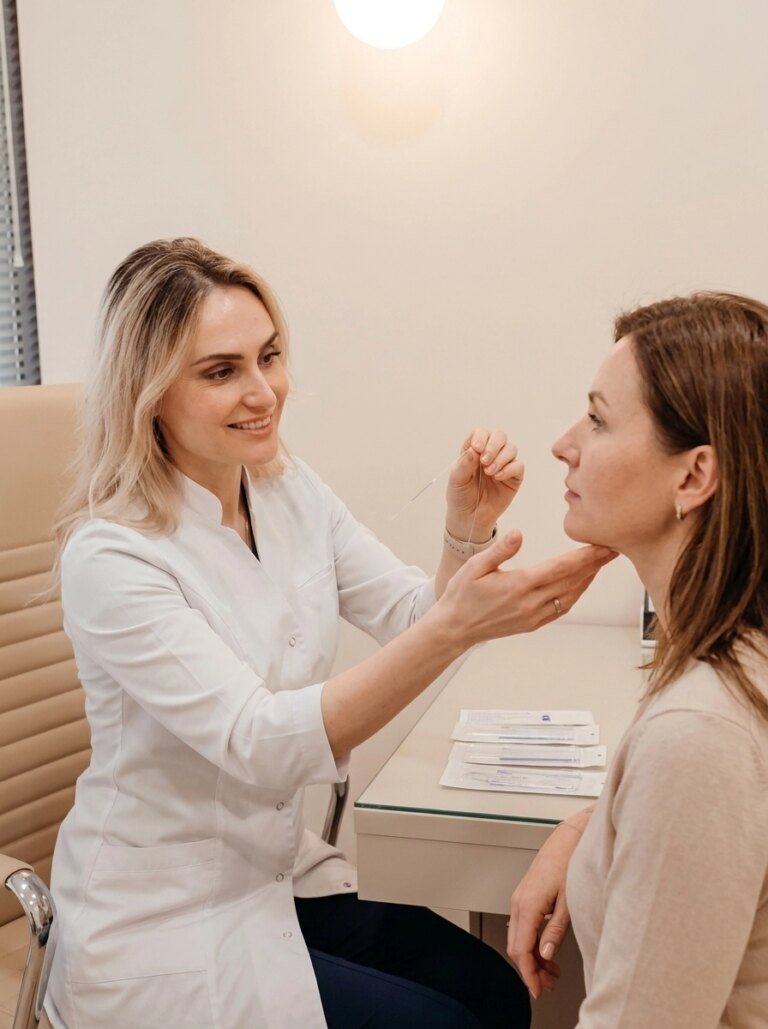
A nose thread lift is a non-surgical rhinoplasty in which smooth PDO (polydioxanone) threads are guided through one small entry point at the base of the nasal tip to lift the tip or add definition to the bridge. The threads dissolve in 9–12 months, and the collagen they stimulate holds the result for a very long time. The treatment is explained on our non-surgical rhinoplasty page. For threads on the face and neck, such as a PDO thread lift, see our guide to a thread lift gone wrong.
What can go wrong after a nose thread lift?
Complications after PDO nose threads are uncommon. The ones reported most often are mild asymmetry, a thread that can be seen under thin skin and, rarely, infection at the insertion site. Nose threads do not carry the risk of vascular occlusion or blindness linked to nose filler, because threads placed with a cannula do not enter the blood vessels. For that reason Dr. Borakowski considers threads a less risky choice for the nose than liquid rhinoplasty with dermal filler.
A visible or palpable thread
If a thread is placed too close to the surface, you may see or feel a fine ridge along the bridge or tip. People with thin skin on the nose are more likely to notice this.
Thread poking through or visible under your upper lip
If a nose thread was not placed correctly, the small strip of tissue between your nostrils (the columella) can be injured or even torn, and the thread can poke through inside your mouth. If that happens, contact your medical provider immediately to avoid infection.
Thread extrusion
This is a possible complication that typically occurs in patients with smaller noses, specifically a shorter columella (the tissue separating your nostrils in the middle). If you feel a thread poking through the injection point at the base of your nose tip, contact the clinic immediately to have it treated and prevent infection.
Infection at the entry point
Infections are rare. An infection shows up as redness, warmth or discharge at the insertion point, often with pain that gets worse after the first few days. An abscess can form, which is why sterile technique and clear aftercare instructions are extremely important.
A result that does not match what you wanted
Threads work on soft tissue only. They cannot make a nose smaller, narrow or change the nasal bones, straighten a deviated septum or fix asymmetry caused by cartilage or an old injury. If you wanted one of those changes, threads were the wrong tool.
What is normal while your nose heals?
- Days 1–3: swelling at the tip, mild tenderness and possible bruising at the insertion point. Sleep with your head raised.
- Days 4–7: swelling starts to go down and the early result shows. The nose may feel firm.
- Week 2: the threads settle. Minor dimpling or skin irregularity, if present, usually resolves.
- Weeks 3–4: the result stabilizes and looks natural.
- Month 6 onward: peak result, then slow softening as the threads finish dissolving.
| What you notice | Usually normal | Call the clinic |
|---|---|---|
| Swelling | At the tip and nasal bridge, typically resolving after 2 weeks | Swelling that keeps increasing |
| Pain | Tenderness for the first 2 weeks | Pain that gets worse after 72 hours |
| Bruising | Most common at the dorsal hump | Bruising that worsens after 72 hours |
| Insertion point | A small mark | Redness, warmth or discharge |
| Thread | Not visible | A ridge or protrusion that looks like a thread |
Have a question about your own skin? Book a consultation at Desert Bloom in Scottsdale
When should you call the clinic right away?
Call (480) 567-8180 the same day for pain that worsens after 72 hours, redness, warmth or discharge at the insertion point, fever, or a ridge that looks like a thread under the skin. If another clinic placed your threads, contact them first, since they have your records. Do not wait out signs of infection.
Worried about a past nose thread treatment? Book an assessment with Dr. Natalya Borakowski or call (480) 567-8180.
What to do if you think your nose thread lift went wrong
- Take clear photos of your nose in daylight from the front and both sides, and note when the problem started.
- Do not squeeze, rub or massage the area. Keep glasses off the bridge if there is bruising there.
- Gather your records: the date, the provider and the threads used.
- Contact the provider who treated you. If your concern is not addressed, get a second opinion.
- Hold off on more nose threads or nose filler until the problem has been assessed.
How Desert Bloom assesses and corrects a nose thread problem
Dr. Borakowski first finds out when the threads were placed, how many, and if you have had filler or surgery on your nose, since both change what can be done next. She then examines your nose to separate normal healing from a real problem. The plan may include:
- Follow-up and time when the issue is still normal settling.
- Prompt treatment of infection. Infections are treated with antibiotics, and severe inflammation may require the thread to be removed.
- Repositioning or removing a thread that is visible or has shifted.
- Botox for the depressor septi nasi when a tip that drops as you smile is part of the concern.
- Filler dissolving with ultrasound guidance when filler from an earlier liquid rhinoplasty is also in the nose.
- Retreatment later, if threads still suit your anatomy. The original PDO threads should dissolve fully first, which typically takes about 6 months.
If your goals need structural change, such as a smaller nose or cartilage work, Dr. Borakowski will tell you directly and refer you to a rhinoplasty surgeon.
How to lower the risk of a nose thread problem
Choose the provider carefully
Provider experience is the biggest single factor in the outcome. Ask how often the provider treats noses and to see results on noses like yours. Dr. Natalya Borakowski has presented a hands-on rhinoplasty masterclass at IMCAS World Congress in Paris on the techniques she uses for nasal thread lifting. She places nose threads with blunt cannulas and uses topical and injectable local anesthesia.
Make sure you are a good candidate
Threads suit a drooping tip, a flat bridge and mild soft tissue asymmetry. If your tip drops mainly when you smile or speak, Botox is often the better first treatment, and Dr. Borakowski recommends it first when your anatomy supports it. Nose threads are not advised with:
- Active infection in or near the nose
- A tendency to form keloids
- A bleeding disorder or blood-thinning medication
- Pregnancy
- An autoimmune condition in active flare
- Permanent filler already in the nose
Follow aftercare closely
Stop ibuprofen, aspirin and blood-thinning supplements 5–7 days before treatment. Afterwards, avoid rubbing your nose and strenuous exercise for 2 weeks, and avoid facial massage or any procedure that presses on the nose for 4 weeks. Glasses can rest on the bridge after 2–3 days if there is no bruising there.
Get a clear plan for your nose
If your nose thread result worries you, Dr. Borakowski will examine your nose, explain what is normal healing and what is not, and set out your options. Book a consultation at Desert Bloom in Scottsdale or call (480) 567-8180.
Frequently asked questions
Can a nose thread lift go wrong?
Yes, although complications are uncommon. The issues reported most often are mild asymmetry, a thread that shows under thin skin and, rarely, infection at the insertion point. Nose threads do not carry the risk of vascular occlusion or blindness linked to nose filler.
Will bumps from PDO nose threads go away?
Small bumps and dimpling usually settle by the end of the second week as swelling goes down and the threads settle. The result should be stable by weeks 3–4. A bump that lasts longer, looks like a thread line or is red and sore should be checked.
Can PDO nose threads migrate?
Thread migration is linked to threads placed too close to the surface. Smooth PDO threads placed in the correct tissue plane are meant to stay where they were put. If you see a ridge or a line that looks like a thread, call the clinic.
How long does swelling last after a nose thread lift?
Swelling at the tip is expected for the first few days and starts to ease between days 4 and 7. The result stabilizes and looks natural by weeks 3–4. Swelling that keeps increasing is not normal.
Do nose threads need to be removed if something goes wrong?
Usually not. Nose threads are nearly impossible to remove once they are placed, so removal is not recommended unless there is a significant complication. PDO threads dissolve on their own in 9–12 months, and waiting is a good option. Dr. Borakowski decides this after examining your nose.
Can I have nose threads again after a bad result?
Often yes, if threads still suit your anatomy. The original PDO threads should dissolve fully first, which typically takes about 6 months, and a new assessment should find out what went wrong before you are treated again.
Have a question about your skin? Book a consultation at Desert Bloom in Scottsdale and we will explain your options, what to expect and the cost.