PRP Under Eyes Before and After: What to Expect

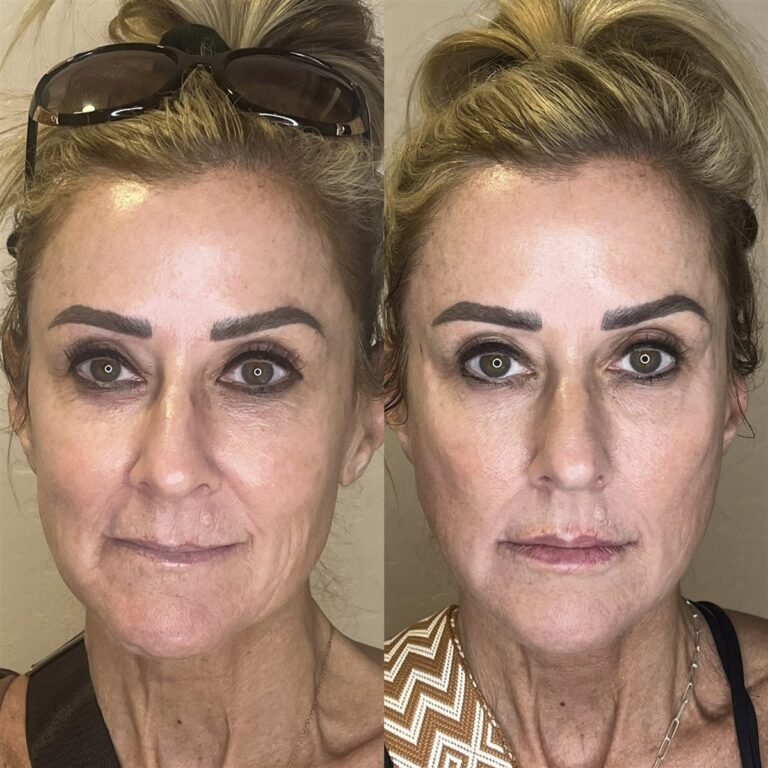
After PRP under the eyes, change comes gradually. Any swelling is mild and settles within a few days. Over the following weeks and months, the skin under your eyes becomes smoother and firmer as new collagen forms.
PRP, or platelet-rich plasma, is a concentrate made from a small sample of your own blood that carries growth factors which stimulate collagen. At Desert Bloom, Dr. Natalya Borakowski uses it under the eyes in two ways: the PRP tear trough treatment, and PRP Biofiller, which mixes your PRP with hyaluronic acid and heats it to form a gel. This guide explains what happens in the weeks after treatment, how many sessions you need, how long results last, who each option suits, how PRP compares with tear trough filler and what it costs.
How do PRP and PRP Biofiller differ?
Standard PRP is a liquid. It adds no volume and spreads out within days, but its growth factors encourage the skin to build collagen. Under the eyes, it is used to improve thin, crepey skin, fine lines, dark circles and skin texture.
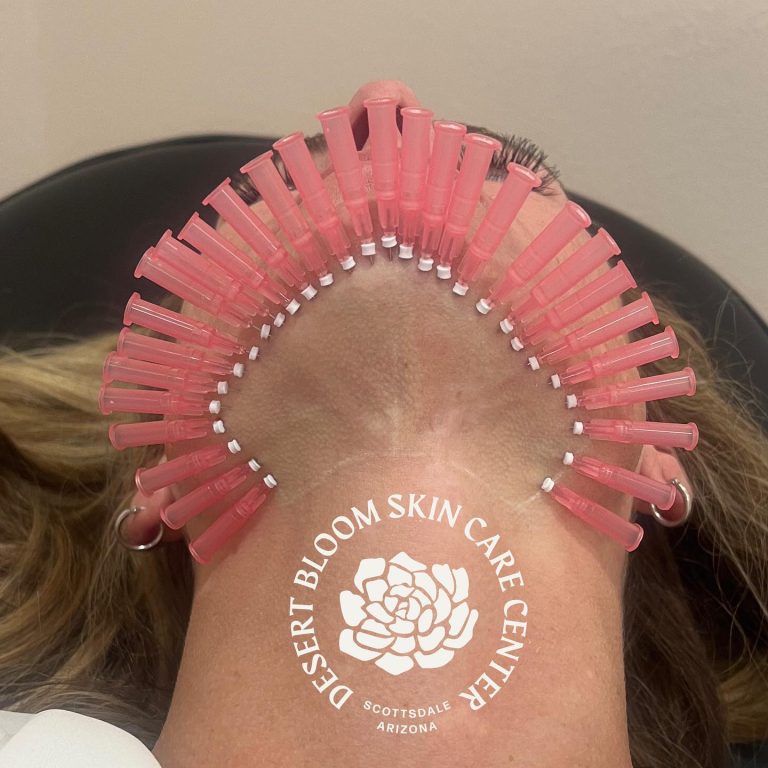
For the PRP tear trough treatment, Dr. Borakowski uses a cannula, with optional tiny injections in the skin using a very small needle (34G, 4 mm). These injections improve skin quality and wrinkles, but they cause more noticeable swelling the next day.
PRP Biofiller adds structure. Dr. Borakowski uses the Velora HA-PRP Kit, which combines your concentrated PRP with hyaluronic acid to make a smooth gel. The hyaluronic acid gives some volume on the day, and the PRP releases growth factors over the following months. The kit is not FDA-approved as a dermal filler device, and the word biofiller describes how the gel behaves.
A PRP Biofiller visit takes about 60–90 minutes. A small blood sample is taken and spun in a centrifuge to concentrate the platelets. The blood sample is collected into sterile tubes that already contain hyaluronic acid, so the whole solution stays sterile while it is processed. The solution is injected with fine needles or a cannula. Dr. Borakowski performs every PRP Biofiller session herself.
What happens in the weeks after PRP under the eyes?
PRP works with your body, so the change builds over time. This is the usual pattern after a PRP session at Desert Bloom. With PRP alone, there is no volume on the day, and the change in skin quality appears gradually over weeks to months.
- Treatment day. PRP gives a mild improvement from the fluid volume added. Some swelling is normal.
- Days 3–4. Mild swelling and possible bruising settle. Most people return to normal activities the same day.
- Weeks 2–6. Growth factors from the platelets begin to stimulate the cells that make collagen.
- Months 2–3 and beyond. Collagen keeps building, and skin texture, fine lines and firmness continue to improve.
- Month 3. Dr. Borakowski assesses your result at your follow-up and decides with you whether a second treatment is needed.
Before a PRP session, avoid blood-thinning medicines such as aspirin and ibuprofen for several days, after checking with your prescribing provider. Skip strenuous exercise for 24 hours after treatment.
Have a question about your own skin? Book a consultation at Desert Bloom in Scottsdale
How many PRP sessions will you need?
The PRP tear trough treatment is recommended every 3 months until the result you want is reached, and each visit takes about 30 minutes. No series is booked in advance: Dr. Borakowski assesses your result at the follow-up 3 months after treatment and decides with you whether a second treatment is needed. PRP Biofiller often takes 2–3 sessions, commonly 12 weeks apart, depending on your plan.
Is your under-eye concern volume or skin quality? Book a consultation with Dr. Natalya Borakowski or call (480) 567-8180.
How long do PRP results last under the eyes?
Skin improvement from the PRP tear trough treatment develops gradually. Final results are assessed at 3 months. Most patients do annual maintenance, but no one can predict how long your own collagen will last, because it depends on your age, your skin and how you look after it.
PRP Biofiller cannot be dissolved. It breaks down naturally over time. Your skin also keeps aging, so maintenance sessions help you hold on to the improvement.
Who is PRP under the eyes suited to?
Dark circles have several causes, and the cause decides the treatment. A hollow under the eye casts a shadow. Thin skin lets the vessels and muscle beneath show through as a blue or purple tint. Brown pigment is a third cause, and many people have more than one.
In Dr. Borakowski’s experience, most women who ask for tear trough correction do not need more volume. They need better skin quality. For women over 40 with thin, crepey skin, fine lines or laxity under the eyes, PRP often gives better results than filler.
The PRP tear trough treatment can suit you if:
- your dark circles come mainly from thin skin and visible vessels rather than a deep hollow;
- you prefer a treatment built from your own blood;
- you have had repeated filler and want less synthetic volume, or synthetic filler did not suit you;
- you want better skin quality along with some volume.
The PRP tear trough treatment may not be suitable if you take blood thinners or have a bleeding disorder, have an active infection in the area, or are pregnant or breastfeeding. Discuss it with Dr. Borakowski first if you have an active autoimmune condition or take medicine that suppresses the immune system. It is also not advised with active cancer or a recent history of cancer. If you want dramatic, immediate contouring, hyaluronic acid filler is better suited.
PRP does not solve every under-eye problem. True eye bags, where fat pushes forward, usually need a surgical assessment. You can read about that concern on the eye bags page. PRP improves skin quality, so it helps when dark circles come from skin that is too thin and translucent. When the darkness comes from skin discoloration, PRX treatments and brightening home care are more effective. See dark circles and eye area treatments for the full range of options.
How does PRP compare with tear trough filler?
Tear trough filler is hyaluronic acid placed in the hollow under the eye. At Desert Bloom it is used for true volume loss, usually in patients under 40. PRP works on skin quality and suits thin, aging skin, usually in patients over 40. Some patients benefit from both, with filler to restore volume and PRP to improve the skin over the longer term.
| Factor | PRP tear trough | PRP Biofiller | Tear trough filler |
|---|---|---|---|
| Best for | Thin, crepey skin, fine lines and skin quality, usually over 40 | Loss of facial volume, when you want to treat the whole face | True volume loss and hollowing, usually under 40 |
| When you see results | Gradually, over weeks to months | Mild volume on the day, then gradual improvement | Right away, settling at about two weeks |
| Sessions | Sessions can be spaced 3 months apart | Often 2–3, spaced 12 weeks apart | 1, can be repeated after 3 months |
| How long it lasts | Most patients do annual maintenance, but no one can predict how long your own collagen will last | Most patients do annual maintenance | Often 5 years or more in Dr. Borakowski’s experience |
| Downtime | Minimal, mild swelling for 3–4 days | Mild swelling for 3–4 days | Minimal, 1–3 days |
| Can it be dissolved? | Not applicable | No, it breaks down naturally | Yes, with hyaluronidase |
| Price at Desert Bloom | $475 per session | $1,500 per session | $595 |
Filler in this area needs great care. The skin under the eyes is very thin and sits near blood vessels that supply the eye. Dr. Borakowski uses conservative volumes and chooses the product, depth and technique for each patient. You can read more on the tear trough treatment page.
How much does PRP under the eyes cost at Desert Bloom?
The PRP tear trough treatment is $475 per session. PRP Biofiller is $1,500 per session and treats the whole face, not just under the eyes. A series of 2–3 sessions typically costs $3,000–$4,500 in total. Extra product or sessions change the total, and you receive a personal estimate before treatment. The consultation is complimentary. You can see current prices for every treatment on the price list.
The right under-eye treatment depends on what is causing the tired look, so an in-person assessment comes first. Dr. Borakowski will look at the depth of any hollow, your skin quality and pigment, and recommend PRP, PRP Biofiller, filler or a combination. Book a consultation at Desert Bloom or call (480) 567-8180.
Frequently asked questions
How soon will I see results from PRP under my eyes?
With PRP you see a mild improvement on the day from the fluid volume added, which deflates within a couple of days. The collagen response starts in weeks 8–9 and keeps building from months 2–3 onward, so the change in skin quality appears gradually.
How many PRP sessions do I need for under-eye circles?
For the PRP tear trough treatment, each session is evaluated individually at your follow-up 3 months later, and a second treatment is decided then if needed. PRP Biofiller often takes 2–3 sessions, commonly 12 weeks apart.
How long does PRP under the eyes last?
Final results are assessed at 3 months. Most patients do annual maintenance, but no one can predict how long your own collagen will last.
Is PRP or filler better for dark circles?
It depends on the cause. Filler suits a true hollow from volume loss, usually in patients under 40. PRP suits thin, crepey skin and fine lines, usually in patients over 40. Dr. Borakowski finds that most women asking for tear trough correction need better skin quality rather than more volume.
Is there downtime after PRP under the eyes?
Very little. Mild swelling and possible bruising usually settle within 3–4 days, and most people return to normal activities the same day. Avoid strenuous exercise for 24 hours after treatment.
Does PRP under the eyes hurt?
Most people report minimal discomfort. A topical numbing cream is applied before the injections. Some bruising or soreness may appear at the injection sites and usually fades within a few days.
Have a question about your skin? Book a consultation at Desert Bloom in Scottsdale and we will explain your options, what to expect and the cost.