
Under-Eye Changes
Dark circles, hollows and puffiness can make you look tired even when you are not. Each has a different cause, so the right care starts with knowing which one you have.
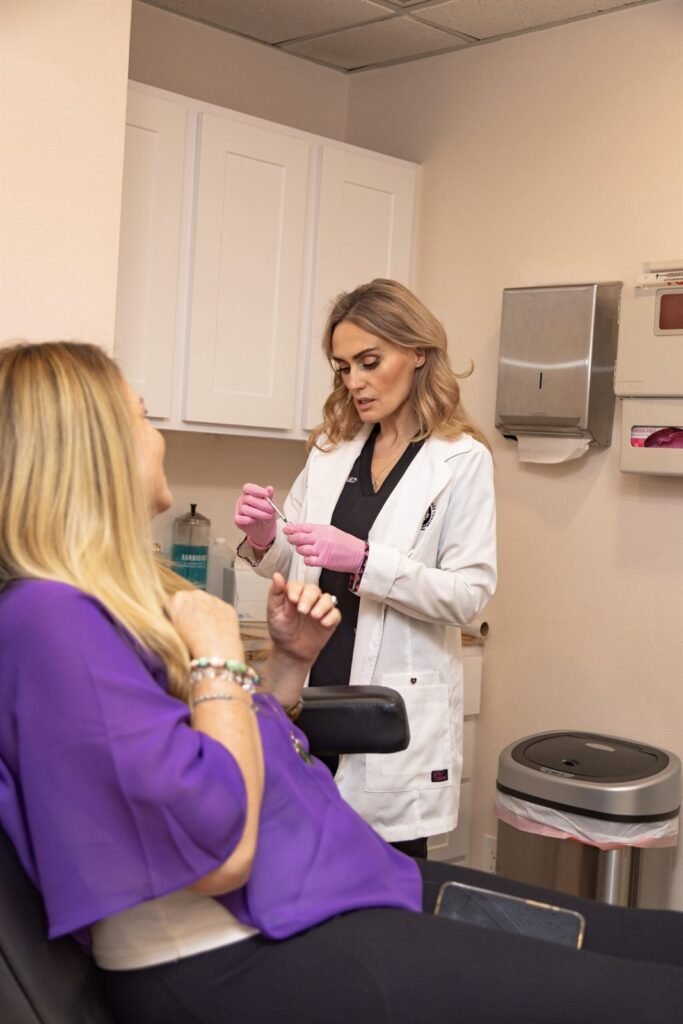
Eye Area Treatments
Tear troughs, crow’s feet, hooded brows, droopy lids, and dark circles: non-surgical options for one of the most delicate areas on the face.
Jump to your concern
The Eye Area Is Different, and That Matters
The periorbital area has the thinnest skin on the face, a dense vascular network, and lymphatic drainage that doesn’t tolerate guesswork. Most patients arrive with two or three concerns at once: hollow tear troughs, dynamic crow’s feet when they smile, a brow that feels heavier than it used to. One treatment rarely solves everything, and not every patient is a candidate for every option.
At Desert Bloom Skin Care in Scottsdale, Dr. Natalya Borakowski, NMD, builds an individualized plan only after a clinical assessment of skin laxity, hollowness, pigmentation, and lid position. Some concerns are best served by filler, some by neurotoxin and some by RF microneedling. A few call for a referral to ophthalmology before we discuss anything aesthetic.
Looking for the broader category? Browse all concerns by area or explore treatments by method.
Want to know which option suits you? Book a consultation with Dr. Natalya Borakowski, NMD
At a Glance
Scope. Tear-trough hollowness, crow’s feet, hooded brows, droopy lids, and dark circles. See pricing for individual treatments.
Provider & candidacy. Treatment plan led by Dr. Natalya Borakowski, NMD, Medical Director. Not everyone is a candidate, so clinical assessment comes first.
How to start. Complimentary consultation with periorbital assessment and routing. Most plans combine two or more treatments.
Start With What You See: A Symptom-Led Decision Guide
Use the cards below to find the most common starting point for each concern. Final routing happens during your consultation after an in-person assessment.
“I see hollowness under my eyes.”
Shadowed troughs that make you look tired even after sleep.
“I see dynamic crow’s feet when I smile.”
Fan-shaped lines at the outer corner of the eye that appear with expression.
“My brows feel heavy or hooded.”
A brow that has drifted down, creating a “hood” over the upper lid.
“I see dark circles.”
Discoloration or shadowing under the lower lid. The cause determines the route.
“My eyelid droops.”
Lid sits lower than it used to, or noticeably lower than the other side.
Treatment Options for the Eye Area
Below are the five non-surgical treatments Dr. Borakowski draws on most often for periorbital concerns. The right choice (or combination) depends on what your assessment reveals.
When to See an Ophthalmologist First
We are a non-surgical aesthetic practice. Some periorbital changes are medical, not cosmetic, and we’d rather route you to the right specialist than treat around a missed diagnosis. Please book a medical eye workup, not an aesthetic consult, if any of the following apply:
- Sudden-onset eyelid drooping (over hours or days).
- Asymmetry greater than about 2 mm between the two lids.
- Vision obstruction from the lid sitting low in your field of view.
- Double vision, severe headache, or pupil asymmetry with the lid change.
- Active conjunctivitis, blepharitis, or unmanaged dry eye.
- Recent eye surgery within the last six months.
- History of retinal disease or retinal detachment.
Once you’ve been medically cleared, we’re happy to revisit aesthetic options. Bringing in records from your eye specialist makes that conversation faster and safer.
Not everyone is a candidate. If you have visible festoons or malar mounds, chronic lymphatic puffiness, a history of sinus-driven under-eye swelling, or significant lower-lid skin laxity, hyaluronic-acid filler in the tear trough can worsen the appearance rather than improve it. Dr. Borakowski will tell you plainly if filler is not the right tool, and we’ll discuss alternatives such as RF microneedling, biostimulators, or referral.
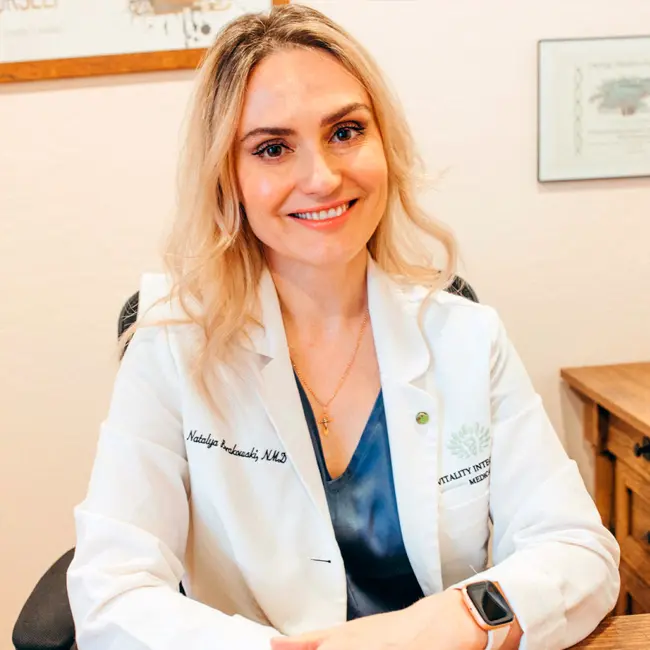
“The eye area asks more of you than almost anywhere else on the face. My job is to tell you what the assessment shows and, just as often, what we shouldn’t do.”
Questions
Frequently asked questions
Why is the eye area considered higher-risk than other areas of the face?
Thin skin, delicate vessels, and lymphatic drainage make the eye area less forgiving than other parts of the face. Small placement errors are more visible, and certain anatomies (festoons, chronic puffiness) don’t respond well to filler at all. This is why we lead with assessment, not product selection.
Can one treatment fix tired-looking eyes?
Usually not. Most patients we see have two or three overlapping concerns (for example, tear-trough hollowness, dynamic crow’s feet, and a heavier brow), and the realistic plan addresses them in layers. Dr. Borakowski will tell you what the most efficient combination looks like for your face.
What’s the difference between tear-trough filler and PRP for under-eye hollows?
Hyaluronic-acid tear-trough filler adds immediate volume with a familiar product. PRP uses your own platelet-rich plasma as a biostimulatory approach. They have different candidate profiles and different result patterns, and your consultation determines which fits your goals.
How long do eye-area results last?
How long results last depends on the treatment and on you. Skin quality, metabolism, expression patterns, and the specific treatment all factor in. Most patients return for a series or touch-up. Realistic ranges are on the individual treatment pages.
What causes dark circles, and which treatment matches?
Dark circles have 4 common causes, and each has a different route. A hollow shadow points to tear trough filler. True brown pigment points to PRX-T33 (Unicorn Facial), not filler, because filler does not treat discoloration. Visible blue or purple vessels can sometimes look less obvious after RF microneedling thickens the skin. A shadow from the bone of the eye socket is anatomy and may only be partly improved. Dark circles are not cured, but they can be made less noticeable.
Is a droopy eyelid medical or aesthetic?
Both, and the line matters. Sudden onset, significant asymmetry, vision obstruction, or any associated neurological symptom is medical first, and we’ll ask you to see an ophthalmologist before we discuss anything cosmetic. Gradual aesthetic heaviness from age-related brow descent or eyelid skin laxity may be addressable with thread lift, neurotoxin balance, or a frank conversation about surgical referral.
How do I know if I’m a candidate for under-eye filler?
You won’t know until the in-person assessment. The pinch test, festoon check, sinus and allergy history, hollowness depth measurement, and pigmentation evaluation are all part of that conversation. We turn patients away when filler isn’t the right tool, and we’ll explain why and what we’d recommend instead.
Can I combine treatments in one visit?
Often, yes. Neurotoxin for crow’s feet pairs well with RF microneedling on a separate visit, and brow-lift threads can sometimes be planned alongside other periorbital work. The sequence and timing are part of your personalized plan, not a default package.
Not sure where to start? Book a consultation and we will look at your skin, explain your options and help you choose care that fits you.