Photo Facial in Scottsdale, AZ 85260

Sun Damage Shows Up Gradually. We Treat It Precisely.
Sun damage accumulates quietly for years, then announces itself all at once: uneven tone, brown spots, and a complexion that looks less clear or consistent than it used to. A photofacial uses targeted light energy to break down excess pigment and restore clarity — without surgery, without significant downtime. At Desert Bloom, we use a Quanta EVO Alexandrite 755nm laser, not standard IPL — a single precise wavelength for more focused pigment targeting than broad-spectrum IPL, often with fewer sessions needed for isolated pigment concerns. Sessions take 15 to 45 minutes.
Photofacial is one of several laser skin treatments at Desert Bloom, alongside CO2 laser resurfacing and Erbium laser resurfacing.
At a Glance
- Non-invasive light treatment for sun damage, age spots, and uneven skin tone
- Quanta EVO Alexandrite 755nm — single-wavelength laser technology, not IPL
- From $275 per session; many patients need 2–4 sessions, while isolated spots may require fewer
- Best suited for Fitzpatrick skin types I–III; consultation required
- Minimal downtime; most return to normal activities same day
- Provided by Dr. Natalya Borakowski, NMD
What Is a Photofacial?
A photofacial is a non-invasive skin treatment that uses targeted light energy to reduce sun damage, age spots, and uneven skin tone. Light energy is absorbed by melanin in the skin, converting to heat that breaks down pigment — the body clears the fragments naturally over the following days and weeks.
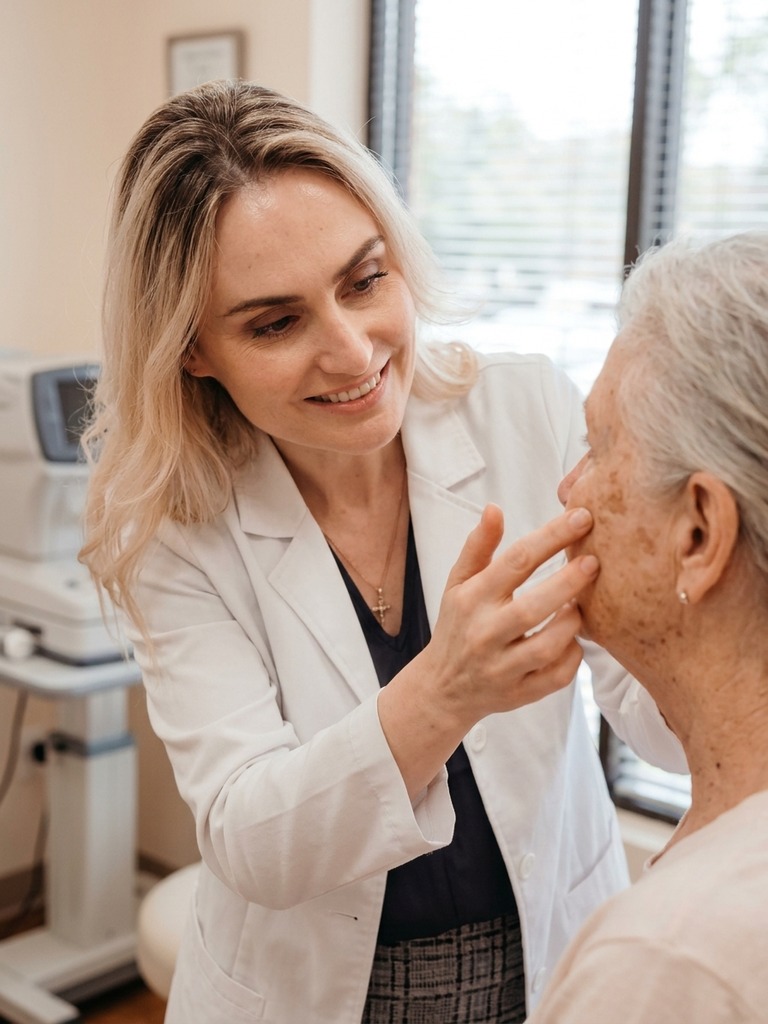
Patients often search for photofacial as a skin rejuvenation treatment, but at Desert Bloom we define it more specifically: this is a pigment-focused laser treatment for sun damage, age spots, freckles, and uneven discoloration.
Traditional photofacials often use IPL, or intense pulsed light therapy — a broad spectrum of wavelengths delivered in multiple pulses across the treatment area. At Desert Bloom, our Quanta EVO Alexandrite 755nm laser emits a single, precise wavelength strongly absorbed by melanin — more focused pigment targeting compared with broad-spectrum IPL. The technology is used selectively for the skin types we treat, with candidacy confirmed during consultation.
How Does Our Photofacial Work?
The Quanta EVO Alexandrite 755nm laser emits a single wavelength that is well absorbed by melanin. Each pulse delivers energy precisely to the target, breaking down pigment so the body can clear it. The goal is to concentrate heat in the pigment-containing areas while minimizing unnecessary exposure to surrounding tissue.
Treated spots look darker before they look better — a “coffee grounds” texture over 5 to 10 days, then the pigment flakes off naturally to reveal clearer skin beneath. Most patients notice visible improvement in skin tone and complexion within 2 weeks of their first session.
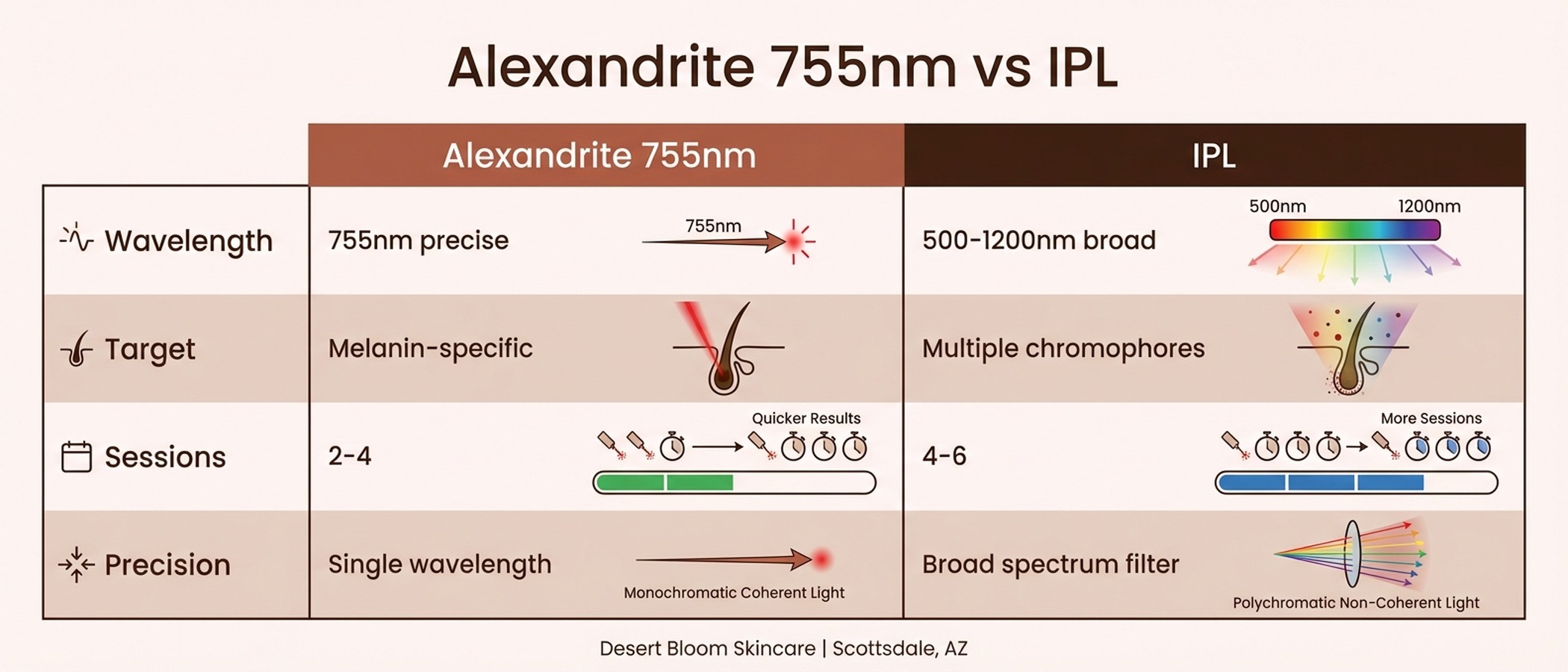
Alexandrite 755nm vs IPL
| Alexandrite 755nm | IPL | |
|---|---|---|
| Light type | Single wavelength (precise) | Broad spectrum light (general) |
| Melanin targeting | High selectivity | Lower selectivity |
| Sessions for pigment | Typically 1–3 | Typically 3–6 |
| Precision | Consistent penetration depth | Variable by filter |
Published research on laser and light-based pigment treatments supports the importance of wavelength selection, skin typing, and matching the device to the clinical target.
“Many clinics use IPL because it is more accessible and lower-cost technology. At Desert Bloom, we choose devices based on precision, safety, and whether they are truly appropriate for the concern being treated.”
Dr. Natalya Borakowski, NMD
What Does a Photofacial Treat?
The Alexandrite 755nm laser is a melanin-targeting treatment. It addresses pigmented skin concerns caused by UV exposure and aging. It does not treat vascular conditions — those require different wavelengths.
Photofacial treatment addresses:
- Sun spots and solar lentigines
- Age spots and freckles
- Brown spots and hyperpigmentation
- Uneven skin tone and discoloration
- Acne scarring with a pigmented component
- Diffuse photoaging and skin texture irregularities from sun damage
These pigmented lesions often appear after years of UV exposure, especially on the face, neck, chest, hands, and arms.
Broken capillaries and spider veins — Vascular targets require hemoglobin-absorbing wavelengths (KTP 532nm). See Vein and Redness Removal.
The Alexandrite is a pigment-targeting treatment. For collagen stimulation or skin tightening, our Elluminate Mini (1064nm Nd:YAG) or CO2 Cool Peel are more effective options.
Treatment areas: face, neck, chest/decolletage, hands, and arms. Many patients choose to treat the face, neck, and chest together when pigment appears across multiple sun-exposed areas.
Who Is a Good Candidate for a Photofacial?
Best results come when candidacy is confirmed at consultation.
- Fitzpatrick skin types I–III with visible sun damage, age spots, or freckles
- Want meaningful improvement with minimal downtime (vs. ablative lasers like CO2 laser resurfacing)
- Have sunspots, pigmented acne scarring, or diffuse photoaging
- Able to commit to sunscreen use and sun avoidance during and after treatment
When a Photofacial May Not Be Right for You
Darker skin tones (Fitzpatrick IV–VI): We generally do not recommend Alexandrite photofacial treatment because the risk of hypo- and hyperpigmentation is significantly higher. Safer alternatives may include topical protocols or non-heat-based treatments after consultation.
Active tan or recent sun exposure: Wait a minimum of 4 weeks after sun exposure.
Photosensitizing medications: Tetracyclines, doxycycline, St. John’s Wort — disclose all medications at consultation.
Pregnancy or active skin infections.
We conduct a thorough skin assessment and medication review before every treatment.
What to Expect During Your Photofacial
Skin assessment, Fitzpatrick typing, medication review, and treatment planning.
Light pulses delivered across target areas; most patients feel a mild rubber-band snap sensation. Sessions take 15 to 45 minutes depending on areas treated.
Spots darken, form a “coffee grounds” texture, then flake off naturally. Do not pick or scrub. Mild redness and swelling may occur in the first 24 hours.
Most patients begin to see clearer, more even-looking skin, with results continuing to refine depending on the amount of pigment treated.
Recovery and Aftercare
Downtime is minimal — most patients return to normal activities the same day. Apply SPF 30+ daily; sun avoidance for at least 4 weeks post treatment is the most important aftercare step.
- Mild redness resolves within 24–48 hours
- Darkened spots flake off naturally over 5–10 days — do not pick
- Avoid hot showers, saunas, and intense exercise for 24 hours
- Makeup can typically be applied the next day
Photofacial Results
Most patients see optimal results after 2 to 4 photofacial sessions spaced 4 to 6 weeks apart. Isolated sun spots and freckles often clear in 1 to 2 treatments. Diffuse photoaging typically requires the full series to achieve best results.
Results can last 12 to 18 months for many patients with consistent sunscreen use and sun avoidance, though new pigment can develop with ongoing UV exposure. Annual maintenance sessions are recommended to sustain an even complexion. Individual results vary. Visit our Before & After Gallery for examples of outcomes our Scottsdale patients have experienced.
Photofacial vs Other Treatments
| Treatment | Best for | Downtime | Sessions |
|---|---|---|---|
| Photofacial (Alexandrite) | Pigment, sun damage, age spots | Minimal | Usually 2–4; isolated spots may need fewer |
| IPL / BBL | Pigment; broader targeting | Minimal | 3–6 |
| CO2 laser resurfacing | Deep wrinkles, scars, texture | 7–14 days | 1–2 |
| Chemical peel | Surface pigment, dullness | Varies | 3–6 |
| Vein and Redness Removal | Spider veins, rosacea, redness | Minimal | 1–3 |
BBL (BroadBand Light) is Sciton’s branded form of IPL, using broad-spectrum light rather than a single laser wavelength. Photofacials are not paired with RF microneedling on the same day. For collagen stimulation, the Elluminate Mini (1064nm Nd:YAG) or CO2 Cool Peel are more effective — the Alexandrite does not penetrate deeply enough for significant collagen remodeling.
Photofacial Cost in Scottsdale
Photofacial cost in Scottsdale at Desert Bloom starts at $275 for a face treatment (45 minutes). The number of sessions needed — typically 2 to 4 — affects the total cost of your plan.
| Treatment Area | Price | Duration |
|---|---|---|
| Face | $275 | 45 min |
| Neck | $225 | 15 min |
| Chest | $325 | 30 min |
| Face / Neck / Chest combo | $575 | 60 min |
| Hands | $175 | 15 min |
| Arms | $375 | 60 min |
The face/neck/chest combination saves $250 versus treating each area separately. Schedule a consultation to receive a personalized cost estimate. See our complete treatment pricing.
Why Choose Desert Bloom for Your Photofacial
Alexandrite 755nm technology. A single-wavelength laser chosen over cheaper IPL for more focused pigment targeting than broad-spectrum IPL, often with fewer sessions needed for isolated pigment concerns.
Dr. Natalya Borakowski, NMD. Nearly two decades of experience. Every patient receives a physician-level consultation — skin typing, medication review, honest assessment of what is needed and what is not. If a photofacial is not the right option for your concern, we will tell you directly.
Customized treatment plans. We assess your skin type, concerns, and goals to build a plan that may include photofacial sessions, maintenance scheduling, and combination treatments where appropriate.
Ethical aesthetics. A good consultation does not always end with a procedure — sometimes it ends with clarity and the right referral.
10752 N 89th Place, Suite 122B, Scottsdale AZ 85260 | (480) 567-8180
All laser skin treatments at Desert Bloom Skincare.

“Choosing Alexandrite 755nm over IPL was a deliberate decision — our patients deserve the most precise and effective technology available, not the most economical. Every consultation includes honest skin typing and a medication review so we can deliver safe, predictable results. And if your concern requires a different wavelength entirely, we will tell you that too.”
Frequently asked questions
What is a photofacial?
A photofacial is a non-invasive light-based treatment that reduces sun damage, age spots, and uneven skin tone without surgery. Targeted light energy breaks down excess melanin, which the body clears naturally over the following days. It is a well-established treatment for patients with pigmented skin concerns on Fitzpatrick skin types I–III.How does a photofacial work?
Light pulses are absorbed by melanin (brown pigment) in the skin. The 755nm wavelength is well absorbed by melanin, efficiently breaking down sunspots, freckles, and discoloration. The Alexandrite primarily targets pigment, not vascular structures or deep tissue — for collagen stimulation, 1064nm Nd:YAG is more effective.How many photofacial sessions do I need?
Most patients see optimal results after 2 to 4 sessions spaced 4 to 6 weeks apart. Isolated sun spots may clear in 1 to 2 treatments. Diffuse photoaging typically requires the full series. Total sessions depend on skin type and extent of sun damage.What is the difference between a photofacial and BBL or IPL photofacial treatments?
BBL (BroadBand Light) is branded IPL — both use broad spectrum light pulses across a range of wavelengths. Desert Bloom uses an Alexandrite 755nm laser, which delivers a single precise wavelength for more focused melanin targeting than IPL photofacial treatments. Fewer sessions are typically needed for the same degree of pigment clearance.Does a photofacial treat rosacea?
No. The Alexandrite 755nm targets melanin, not hemoglobin. Rosacea is a vascular condition — the redness and flushing require hemoglobin-absorbing wavelengths such as 1064nm Nd:YAG. If rosacea is your primary concern, Vein and Redness Removal is the appropriate treatment path.Can a photofacial treat spider veins or broken capillaries?
No. Spider veins and broken capillaries are vascular targets that require KTP 532nm — not the melanin-absorbing Alexandrite 755nm. If these are your primary concerns, Vein and Redness Removal is the correct treatment. Many patients have both pigment and vascular concerns — a consultation will determine the right sequencing.Does a photofacial hurt?
Most patients describe a mild rubber-band snap sensation when each pulse is delivered. Sessions take 15 to 45 minutes. Mild warmth and redness may last a few hours. Discomfort is generally minimal, and anesthesia is typically not needed.What is the recovery time after a photofacial?
Minimal downtime. Spots darken and flake off over 5 to 10 days. Most patients return to normal activities immediately. Avoid sun exposure and apply sunscreen daily for at least 4 weeks post treatment.Is a photofacial safe for darker skin tones?
At Desert Bloom, Alexandrite photofacial treatment is generally not recommended for Fitzpatrick skin types IV–VI because pigment-related risks are higher. A consultation will determine the safest option for your skin type and conditions.How long do photofacial results last?
Results typically last 12 to 18 months with consistent sunscreen use and sun protection. Annual maintenance sessions are recommended. Individual results vary based on lifestyle and sun exposure habits.Book a Photofacial Consultation in Scottsdale
Every consultation at Desert Bloom — for any treatment — starts with a complimentary assessment. Dr. Borakowski evaluates your skin type, reviews your medications, and recommends a treatment plan — including whether photofacial is the right approach or whether a different procedure better serves your needs.
Desert Bloom Skincare
10752 N 89th Place, Suite 122B, Scottsdale, AZ 85260
(480) 567-8180
References
- “Applications of Long-Pulse Alexandrite Laser in Cosmetic Dermatology.” Journal of Clinical Medicine. 2023. (PMCID: PMC10661922)
- “The Efficacy of 532/755 nm Laser Therapy for Facial Pigmented and Vascular Lesions: A Systematic Review and Meta-Analysis.” Journal of Clinical Medicine. 2025. DOI(PMID: 40283377; PMCID: PMC12028165)
- “Evaluation of the Efficacy of the 755 nm Picosecond Laser in Eliminating Pigmented Skin Lesions after a Single Treatment Based on Photographic Analysis with Polarised Light.” Journal of Clinical Medicine. 2024. DOI(PMID: 38256438; PMCID: PMC10816936)
- “Safety and efficacy of a picosecond 755-nm alexandrite laser combined with topical tranexamic acid in the treatment of melasma.” Journal of Cosmetic Dermatology. 2024. DOI(PMID: 39234928)
Individual results may vary. A photofacial is not a substitute for medical diagnosis or treatment. All medical procedures carry risks. Consult with a qualified provider to determine if this treatment is appropriate for you.
Content reviewed by Dr. Natalya Borakowski, NMD | Last updated April 2026.
Photo Facial price
- Face$27545 minutes
- Neck$22515 minutes
- Chest$32530 minutes
- Face/Neck/Chest$57560 minutes
- Hands$17515 minutes
- Arms$37560 minutes
- Blood vessel removal$275per 15 minutes
Consultation in skin care clinic
Desert Bloom Skincare Center offers personalized skincare consultation to help you achieve a flawless and radiant complexion. Book your appointment today and let our expert team of skincare professionals address your specific concerns and help you reach your skincare goals.
Similar treatments
Visit Our Scottsdale Aesthetic Center
Address
10752 N 89th Place, Suite 122B,Scottsdale, AZ 85260.
Phone:(480) 567-8180
E-mail:info@desertbloomskincare.com
Get Directions →Location & Directions
Desert Bloom Skincare is conveniently located in the Shea Corridor of North Scottsdale, within Edwards Professional Park I — minutes from HonorHealth Scottsdale Shea Medical Center and the Mayo Clinic Scottsdale Campus.
Areas We Serve
We proudly provide expert non-surgical rhinoplasty and PDO thread lifts to patients across the Southwest:
- ScottsdaleNorth Scottsdale · McCormick Ranch · Gainey Ranch
- Paradise Valley
- PhoenixArcadia · Biltmore · North Phoenix
- Fountain Hills
- Cave Creek & Carefree